


Key Takeaways
A commercial purchase follows a fixed order of steps, and most of the risk sits in the middle of that order.
- A clean commercial purchase in Charlotte closes 60 to 90 days after the purchase agreement is signed. SBA loans or environmental issues can push that past six months.
- The letter of intent sets the terms that matter most, and they get much harder to change once attorneys start drafting.
- Due diligence is your exit window, usually 30 to 60 days for inspections, environmental review, title, survey, and zoning.
- Plan on $5,000 to $20,000 or more for due diligence reports. Most of that is spent whether the deal closes or not.
- A buyer’s representative keeps the lender, attorney, and title company on one timeline so deadlines do not slip.
Once your business decides to own its space, the work turns into deadlines, reports, and a contract that can cost you real money if a date slips by.
Still weighing whether to buy at all? Start with Should Your Business Buy Its Commercial Space? This guide picks up after that decision and walks through the commercial real estate buying process in Charlotte, step by step.
How Long Does It Take to Buy Commercial Real Estate?
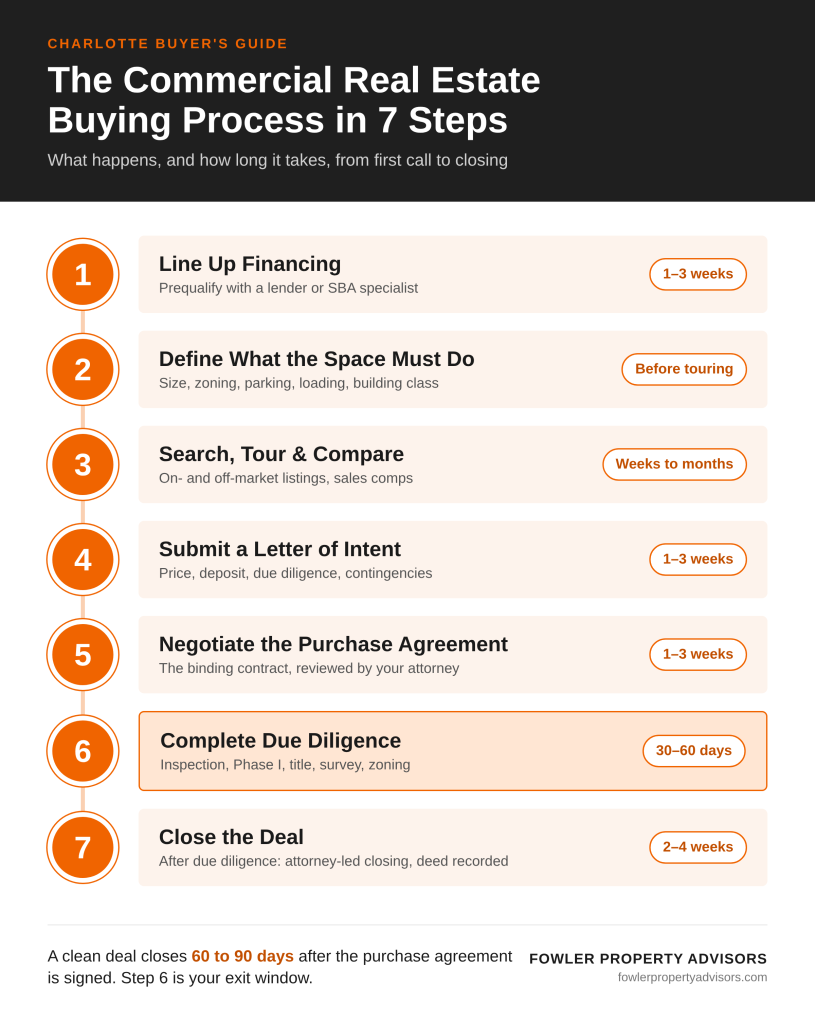
Most commercial purchases in Charlotte close 60 to 90 days after both sides sign the purchase agreement. The search before that can take a few weeks or several months, depending on how specialized your space needs are.
SBA 504 loans, an environmental finding, or a title issue the seller has to clear can stretch that to six months or longer. Lender underwriting usually runs alongside due diligence, so the last two stages overlap.
| Stage | Typical Timing |
|---|---|
| Financing prequalification | 1 to 3 weeks |
| Search and property tours | A few weeks to several months |
| Letter of intent negotiation | 1 to 3 weeks |
| Purchase agreement drafting | 1 to 3 weeks |
| Due diligence period | 30 to 60 days |
| Final underwriting and closing | 2 to 4 weeks after due diligence |
What Are the Steps to Buy Commercial Real Estate?
Buying commercial real estate takes seven steps, starting with a loan conversation and ending when the deed is recorded. Each one shapes your position in the next.
Step 1: Line Up Financing Before You Tour
Talk to a commercial lender or SBA specialist before you look at a single building. You need a real budget, and sellers want to see a buyer who can close.
Lenders typically ask for two to three years of business tax returns, current financial statements, and a personal financial statement from each owner. SBA 504 loans for owner-occupied property can require as little as 10 percent down, while conventional commercial loans usually require more. Your lender can tell you which program fits your situation.
In Charlotte’s commercial real estate market, well-priced buildings in strong submarkets can go under contract before a slower buyer finishes the paperwork.
Step 2: Write Down What the Space Has to Do
Put your requirements on paper before the first tour so you can rule buildings out quickly. Cover these at a minimum:
- Square footage, plus room for three to five years of growth
- Zoning that allows your use, including outdoor storage or late hours
- Parking, loading docks, clear height, and power for industrial or flex users
- Building age and class, which drive repair costs once you own it
Unsure which property type fits? Office vs. Industrial vs. Retail: Choosing the Right Commercial Space in Charlotte breaks down each option. Class A, B, and C buildings also carry very different price points and upkeep, so know which tier you are shopping in.
Step 3: Search, Tour, and Compare Properties
A buyer’s representative pulls listings from public databases and off-market contacts, then runs sales comps so you know what a fair price looks like before you get attached.
The listing broker’s job is to get the seller the highest price. Fowler Property Advisors works exclusively for buyers and tenants, so every comp and recommendation is built around your side of the deal.
If you are interviewing reps now, these tips on how to choose the right commercial real estate broker cover the questions worth asking.
Buying a Building in Charlotte? Start With the Right Timeline
Fowler Property Advisors represents buyers and tenants exclusively, from the first tour through the closing table. A 15-minute call is enough to map out your purchase timeline and the deadlines that carry the most risk.
Schedule a Free ConsultationStep 4: Submit a Letter of Intent
Commercial offers start with a letter of intent, a short document that lays out the business terms before anyone pays an attorney to draft a contract. Most LOIs are nonbinding, apart from clauses like confidentiality or a short exclusivity period.
This one matters more than most buyers expect. The terms you agree to here become the starting point for the purchase agreement.
| LOI Term | Why It Matters |
|---|---|
| Purchase price | Sets the number the appraisal has to support |
| Earnest money deposit | Sets what you risk by walking away late |
| Due diligence period | Gives you time to inspect and exit if something turns up |
| Financing contingency | Lets you walk away if the loan falls through |
| Cost allocation | Spells out who pays for title insurance, the survey, and other closing costs |
Step 5: Negotiate the Purchase Agreement
Once the LOI is signed, an attorney drafts the purchase and sale agreement. This is the binding contract, and it carries far more detail than the LOI did.
Read the earnest money terms closely, since they spell out when your deposit becomes nonrefundable, often called going hard. The contingencies list each condition that lets you walk away.
Have your own real estate attorney review it before you sign. A small wording change around a deadline can decide whether your deposit comes back.
Step 6: Complete Due Diligence
Due diligence is the window between a signed contract and closing where you confirm everything the seller told you. Most Charlotte contracts allow 30 to 60 days, and reports typically run $5,000 to $20,000 or more. Here is who usually handles what.
| Due Diligence Item | What It Checks | Who Handles It |
|---|---|---|
| Property condition assessment | Roof, HVAC, structure, plumbing, electrical, and remaining useful life | Commercial inspector or engineer |
| Phase I environmental site assessment | Past uses of the site and contamination risk | Environmental consultant |
| Title search and commitment | Liens, easements, and clear ownership | Title company and attorney |
| ALTA survey | Boundaries, encroachments, and access | Licensed surveyor |
| Zoning review | Whether your use is permitted and parking meets code | Attorney or zoning consultant |
| Lease and estoppel review | Rent roll and tenant obligations, if the building has tenants | Your attorney |
Order the inspection and the Phase I in the first week. Those take the longest to come back.
Step 7: Close the Deal
Once you release due diligence and the lender issues a final loan commitment, closing gets scheduled. In North Carolina, a real estate attorney typically handles the closing alongside the title company.
Budget 2 to 5 percent of the purchase price for closing costs, covering lender fees, title insurance, legal fees, and recording. Many commercial lenders also require cash reserves after closing, often several months of loan payments, so ask about that early.
Walk the property a day or two before closing. Then funds are wired, documents are signed, the deed is recorded, and the building is yours.
What Happens If Due Diligence Turns Up a Problem?
If due diligence turns up a problem, you can renegotiate the price, ask the seller to fix it, or walk away before your deadline. Your options usually include:
- A price reduction that reflects the cost of the repair
- A seller credit at closing so you control the work after you own the building
- A seller repair before closing, followed by a reinspection
- Termination, with your earnest money returned
Say a roof inspection on a Northlake flex building shows five years of life left. A credit sized to a contractor’s bid usually serves you better than a seller repair, since a departing owner has every reason to pick the cheapest fix.
Every one of these options expires the moment your due diligence period ends. Put that date on your calendar the day you sign.
What Do First-Time Commercial Buyers Get Wrong?
The costliest mistakes in a commercial purchase usually trace back to skipped steps and missed dates. Here are a few worth knowing.
- Ordering a basic inspection on a complex building. A residential-style inspection will miss aging rooftop units or an undersized electrical service.
- Forgetting the buildout. Older buildings often need restrooms, accessibility upgrades, or a full interior refresh. Get contractor pricing before you release due diligence.
- Letting the clock run out. A report that shows up on day 58 of a 60-day period leaves almost no room to negotiate.
Many of the costly commercial real estate mistakes that trip up tenants show up in purchases too, with a bigger price tag attached.
What Should You Do Before Making an Offer?
Before you make an offer, get prequalified with a lender, write down your space requirements, and bring in a buyer’s representative who works only for you. That puts you in position to write a strong LOI.
If the numbers do not hold up at today’s financing costs, leasing may be the better move for now. Why Leasing Commercial Space in Charlotte Is the Right Move for Many Businesses walks through that side of the decision.
Ready to Buy? Get Someone on Your Side of the Table
Barrett Fowler works only for buyers and tenants, never sellers or landlords. Talk through your purchase before you sign an LOI, so the terms that matter most are set in your favor.
Schedule a Free ConsultationFrequently Asked Questions About the Commercial Real Estate Buying Process
Can You Back Out of a Commercial Real Estate Purchase?
Yes, as long as you act before your contingencies expire. Most contracts let a buyer terminate for any reason during due diligence and recover the earnest money. After that, walking away usually means losing the deposit, and possibly more, depending on the contract.
What Is a Phase I Environmental Site Assessment?
A Phase I reviews a property’s history and current condition to flag possible contamination, such as old fuel tanks or past industrial use. Lenders usually require one. If it raises a concern, a Phase II with soil or groundwater testing may follow.
What Is the Difference Between an LOI and a Purchase Agreement?
An LOI is a short, mostly nonbinding outline of price and major terms. The purchase agreement is the full contract an attorney drafts afterward, setting the deadlines, deposit rules, and contingencies both parties must follow.
What Does It Mean When Earnest Money Goes Hard?
Your deposit goes hard when it becomes nonrefundable, usually the day due diligence ends. After that, backing out for a reason outside the remaining contingencies typically means the seller keeps the money. Mark the date as soon as you sign.
Who Handles the Closing on a Commercial Property in NC?
A real estate attorney typically runs commercial closings in North Carolina. The attorney works with the title company and lender, oversees the signing, and records the deed with the county register of deeds once funds are wired.